
Needle biopsy
FNAC and Biopsy by pathologist
FNAC and Biopsy by pathologist
The sampling and biopsy considered together are called fine-needle aspiration biopsy (FNAB) or fine-needle aspiration cytology (FNAC) (the latter to emphasize that any aspiration biopsy involves cytopathology, not histopathology). Fine-needle aspiration biopsies are very safe minor surgical procedures
Fine Needle Aspiration Cytology (FNAC) is a simple, quick and inexpensive method that is used to sample superficial masses like those found in the neck and is usually performed in the outpatient clinic. It causes minimal trauma to the patient and carries virtually no risk of complications. Masses located within the region of the head and neck, including salivary gland and thyroid gland lesions can be readily diagnosed using this technique. The objective of this descriptive study was to see the frequency of various pathological conditions detected on FNAC in patients presenting with neck swellings coming to Surgical Outpatient Department
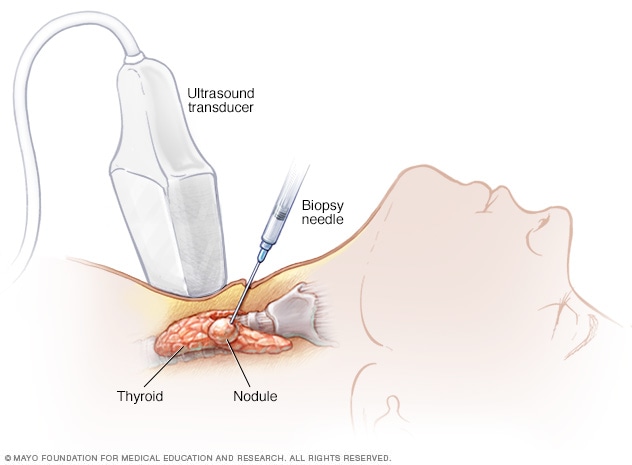
During needle biopsy, a long, thin needle is inserted through the skin and into the suspicious area. Cells are removed and analyzed to see if they are cancerous.
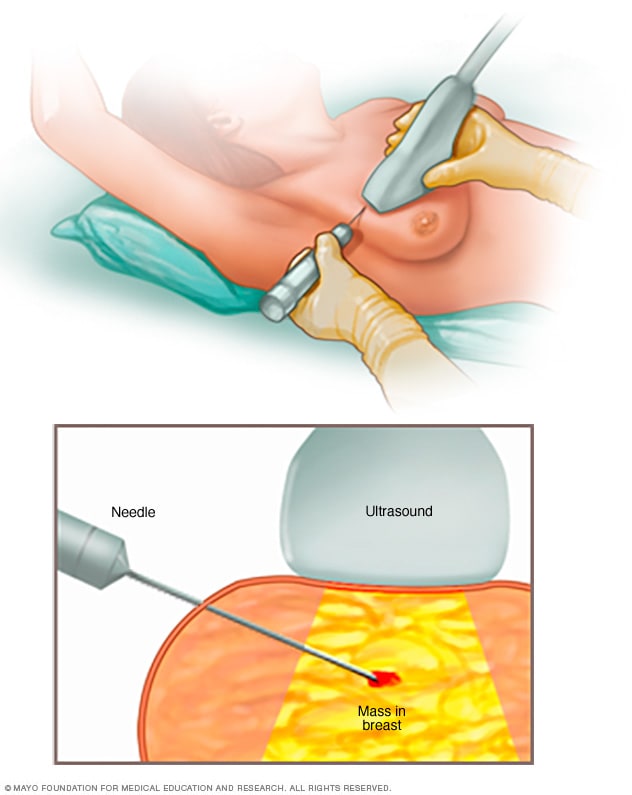
Core needle biopsy
A core needle biopsy uses a long, hollow tube to extract a sample of tissue. Here, a biopsy of a suspicious breast lump is being done. The sample is sent to a laboratory for testing.
A needle biopsy is a procedure to obtain a sample of cells from your body for laboratory testing. Common needle biopsy procedures include fine-needle aspiration and core needle biopsy. Needle biopsy may be used to take tissue or fluid samples from muscles, bones, and other organs, such as the liver or lungs.
Why it’s done
Your doctor may suggest a needle biopsy to help diagnose a medical condition or to rule out a disease or condition. A needle biopsy may also be used to assess the progress of a treatment.
The sample from your needle biopsy may help your doctor determine what’s causing:
- A mass or lump. A needle biopsy may reveal whether a mass or lump is a cyst, an infection, a benign tumor or cancer.
- An infection. Analysis from a needle biopsy can help doctors determine what germs are causing an infection so that the most effective medications can be used.
- Inflammation. A needle biopsy sample may reveal what’s causing inflammation, and what types of cells are involved.
You may also undergo imaging tests, such as a computerized tomography (CT) scan or an ultrasound, before your needle biopsy. Sometimes these tests are also used during the needle biopsy procedure to more accurately locate the area to be biopsied.
Copyright ©2025 Harla Clinic. All rights reserved